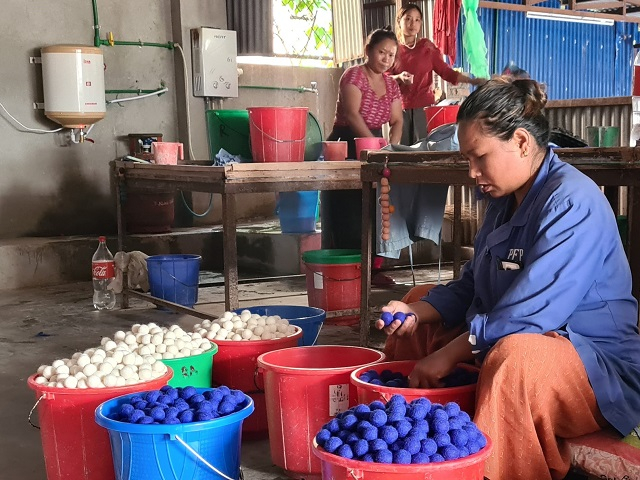

Sana Hastakala, Nepal
Sana Hastakala means “small handicrafts” in Nepali. The organization’s primary goal is to promote and revive traditional craft skills through the use of modern techniques. This enables Nepal’s disadvantaged, predominantly female artisans to earn a living wage.
Sana Hastakala is a local, nonprofit Fair Trade organization that provides design, marketing, management, and technical services to low-income Nepalese artisanal workshops. The organization has two divisions: the local retail division and the export division, which sells handicrafts around the world.
Founded in 1989 with the support of UNICEF, the organization became self-sufficient within two years and has grown steadily ever since. Today, it is a successful nongovernmental organization (NGO) comprising approximately 60 producer groups.
Sana Hastakala is a member of the World Fair Trade Organization (WFTO) and a founding member of the FAIRTRADE Group Nepal (FTG).
The products offered range from textiles (knitting, felting, sewing, weaving) and recycled items to clay items, singing bowls, woodwork, handmade paper, and Mithila painting. All products are handmade in-house or by small-scale producers in Nepal.
The Impact of Fair Trade
Through its work, the organization aims to preserve traditional Nepalese handicrafts and create income opportunities for socially disadvantaged groups.
- The organization’s primary goal is to help the countless women—most of whom are single mothers without a high school diploma or vocational training—gain opportunities for personal development and financial independence. Today, the majority of the more than 1,200 artisans are women.
- Many workers receive a monthly base salary or are able to take work home; in such cases, they are paid on a piece-rate basis.
- Long-term employees receive a retirement plan; medical care is provided, and a cafeteria is available. In the event of illness or pregnancy, wages continue to be paid for two months. A scholarship fund is also available to support children’s education (especially for girls). Sana Hastakala also offers its employees loans at a low interest rate.
- New workers receive on-the-job training; dedicated female employees can qualify to become group leaders: free training courses are offered in personnel management, administration, bookkeeping, and dealing with banks. However, these opportunities are not often taken up; for most artisans, daily survival is more important than continuing education.
- Self-employed artisans—such as those involved in singing bowl production or woodcarving—can become members of Sana Hastakala if they commit to the principles of fair trade (good working conditions, no child labor, and paid overtime). Sana Hastakala monitors compliance with these standards.
In addition, several measures—including the installation of rainwater tanks and a wastewater treatment plant—serve to improve the severely threatened environment.
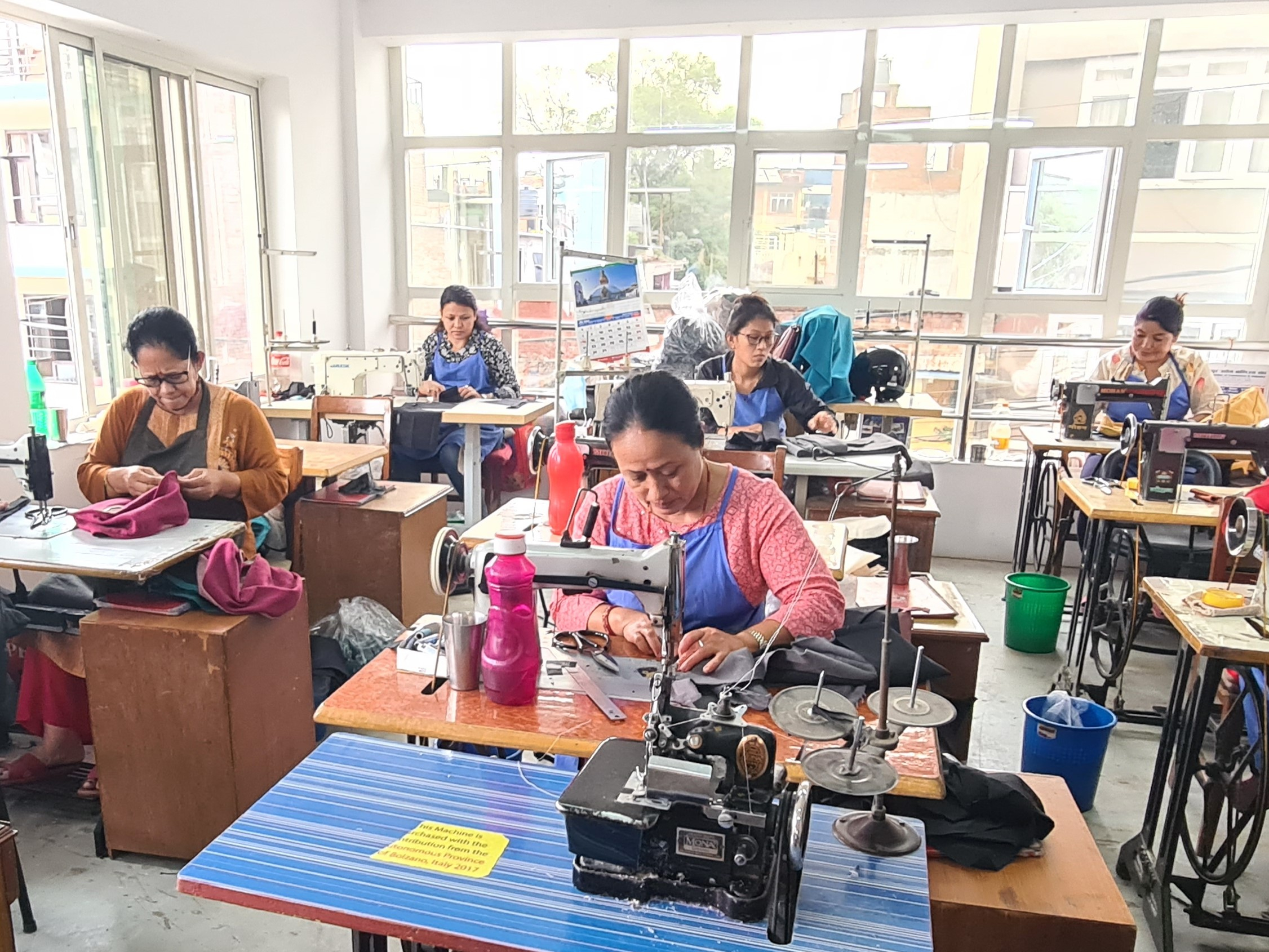
There is a sewing workshop in the building
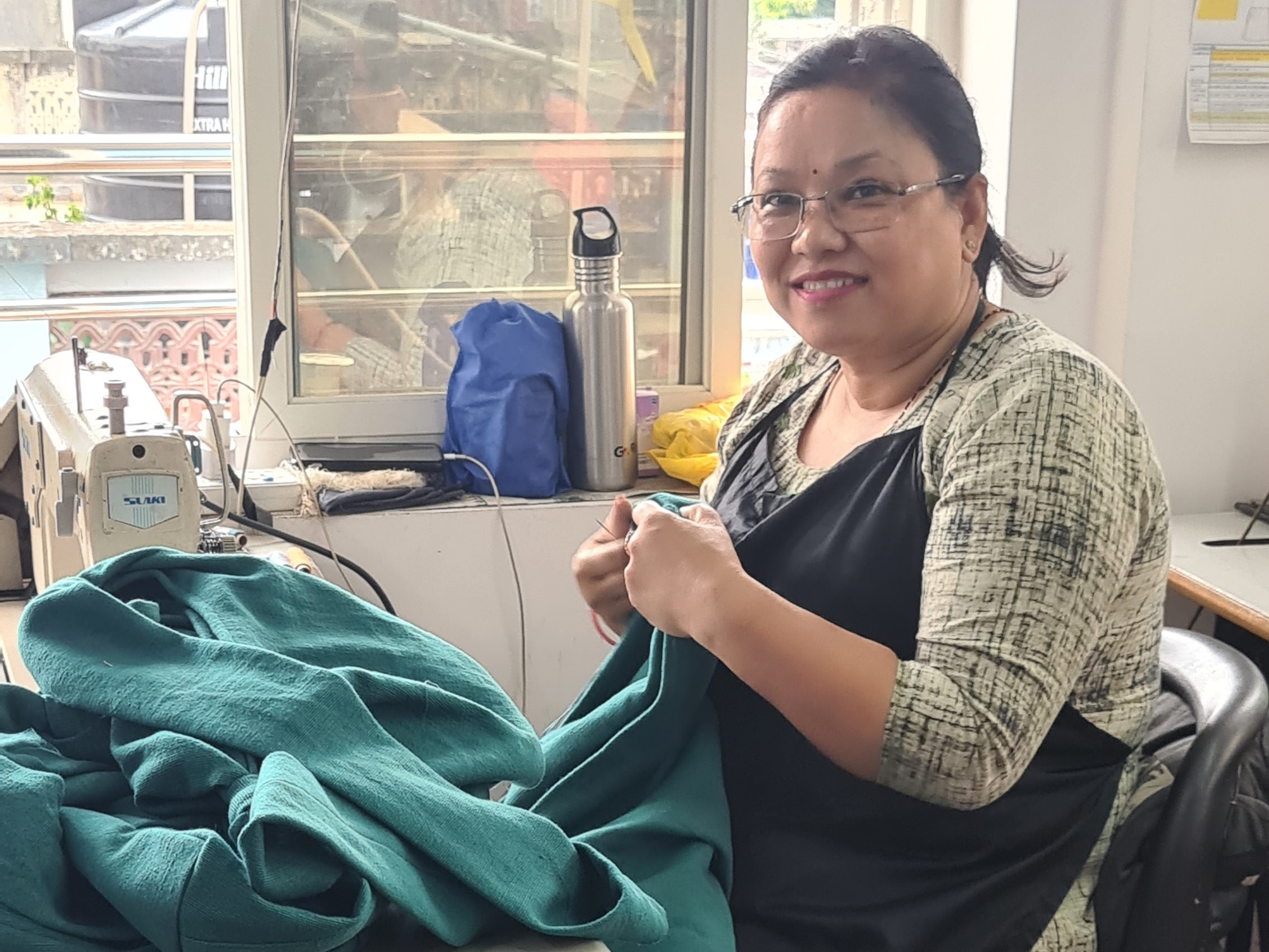
The first prototypes are developed in-house and are then also manufactured at home
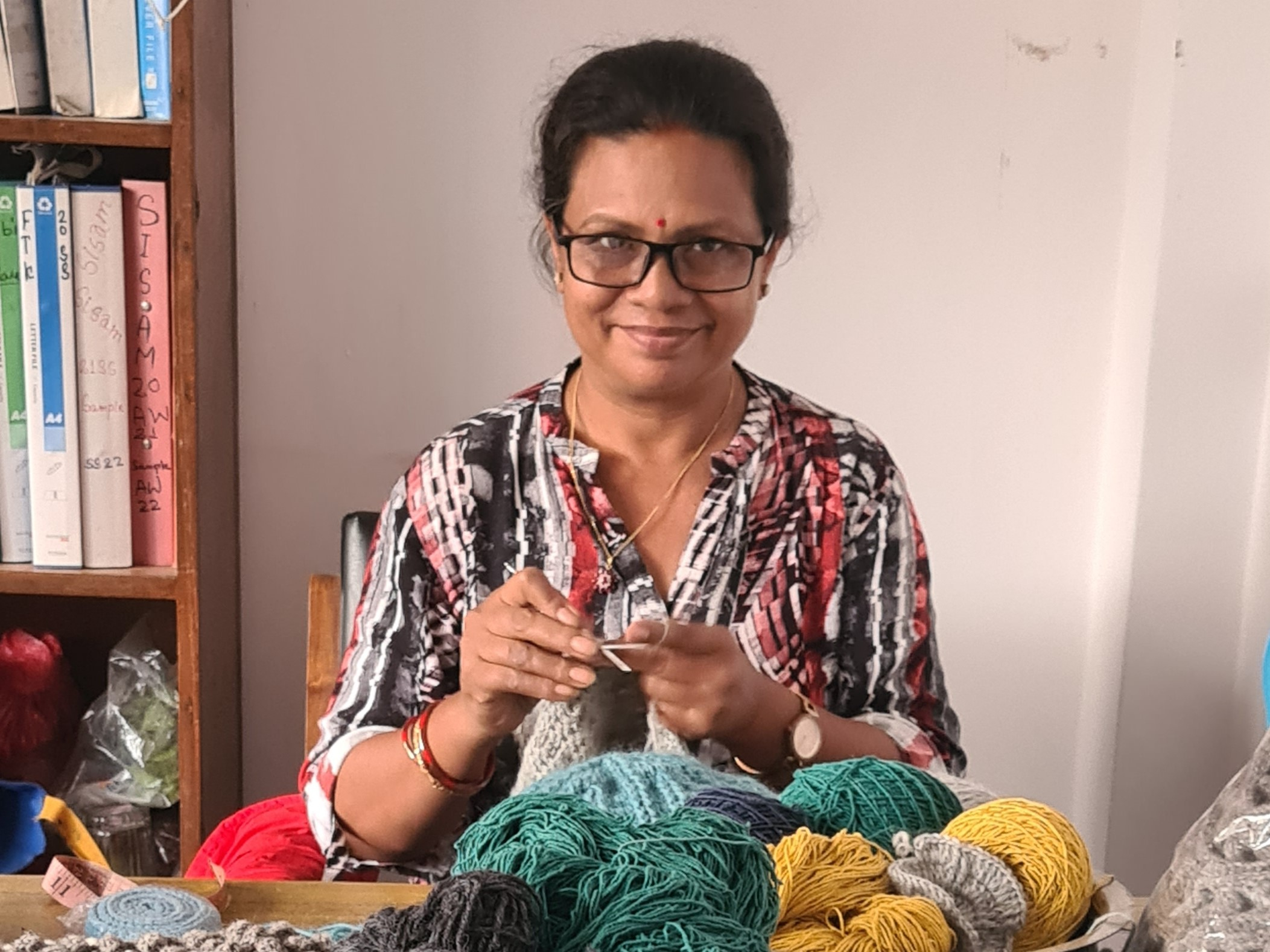
Wool is just a great material!