


Coffee
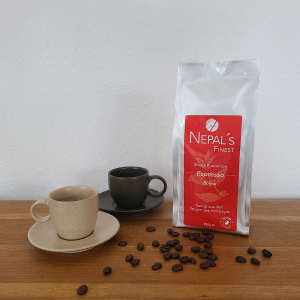
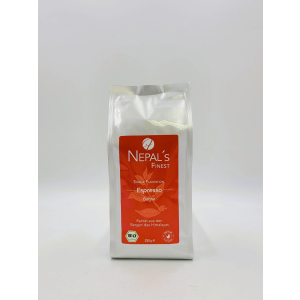
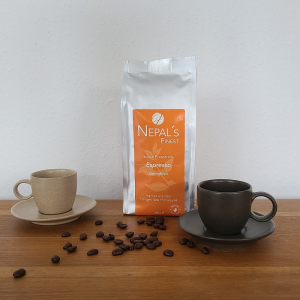
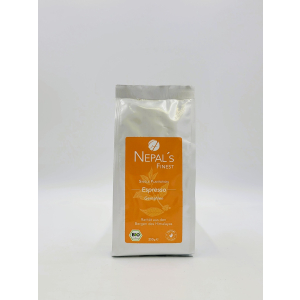
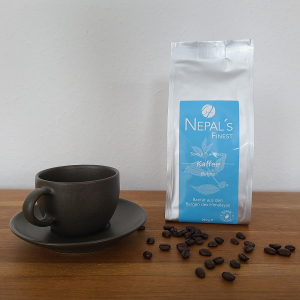
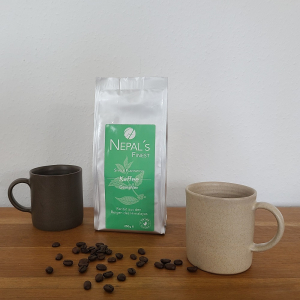
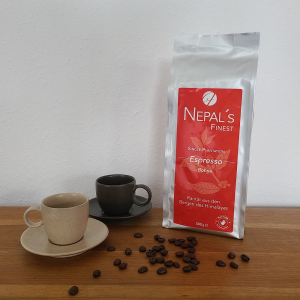
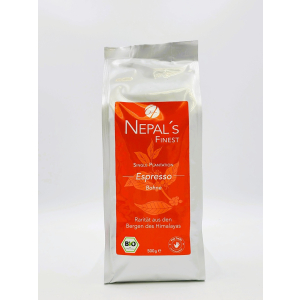

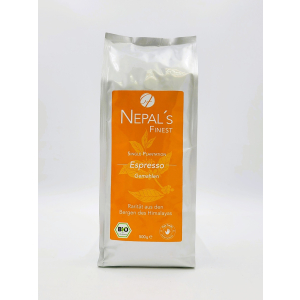
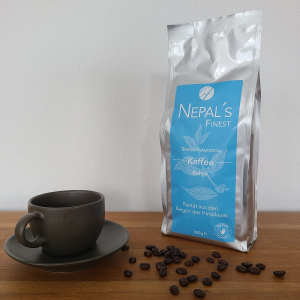
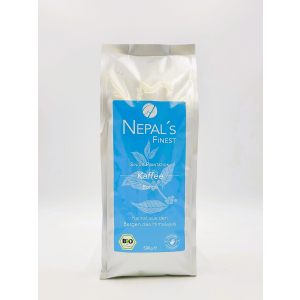
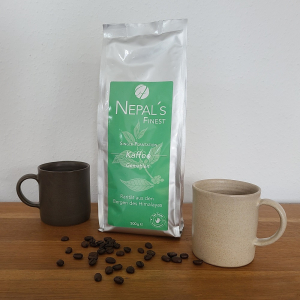
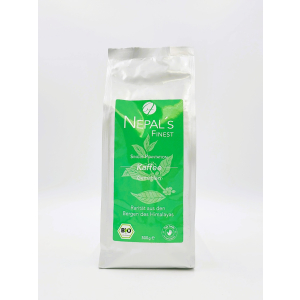
Nepal’s Finest Coffee Nepal is home to one of the world’s northernmost coffee plantations, located about 80 km northwest of Kathmandu at the foothills of the Ganesh Himal mountain range. This coffee is grown on approximately 70 hectares in a frost-free mountain valley at an altitude of around 900 meters along the banks of the Trisuli River.
Cultivation on a single plantation and organic farming ensure high and consistent product quality. Here, the coffee bushes grow traditionally—that is, in the shade of existing trees rather than in an artificial monoculture. This is significantly more environmentally friendly and also protects the coffee: grown in the shade, the bushes are protected from excessive sun, the mixed cultivation reduces the risk of pests, and less water is required for irrigation.
The cherries thus reach optimal ripeness; between January and April, only the truly ripe coffee cherries are then picked by hand. While this is more labor-intensive than machine stripping of the bushes, it is also gentler on the shrub and guarantees quality during further processing. The beans are then washed with fresh mountain water from the Ganesh Himal and hand-sorted after natural sun-drying.